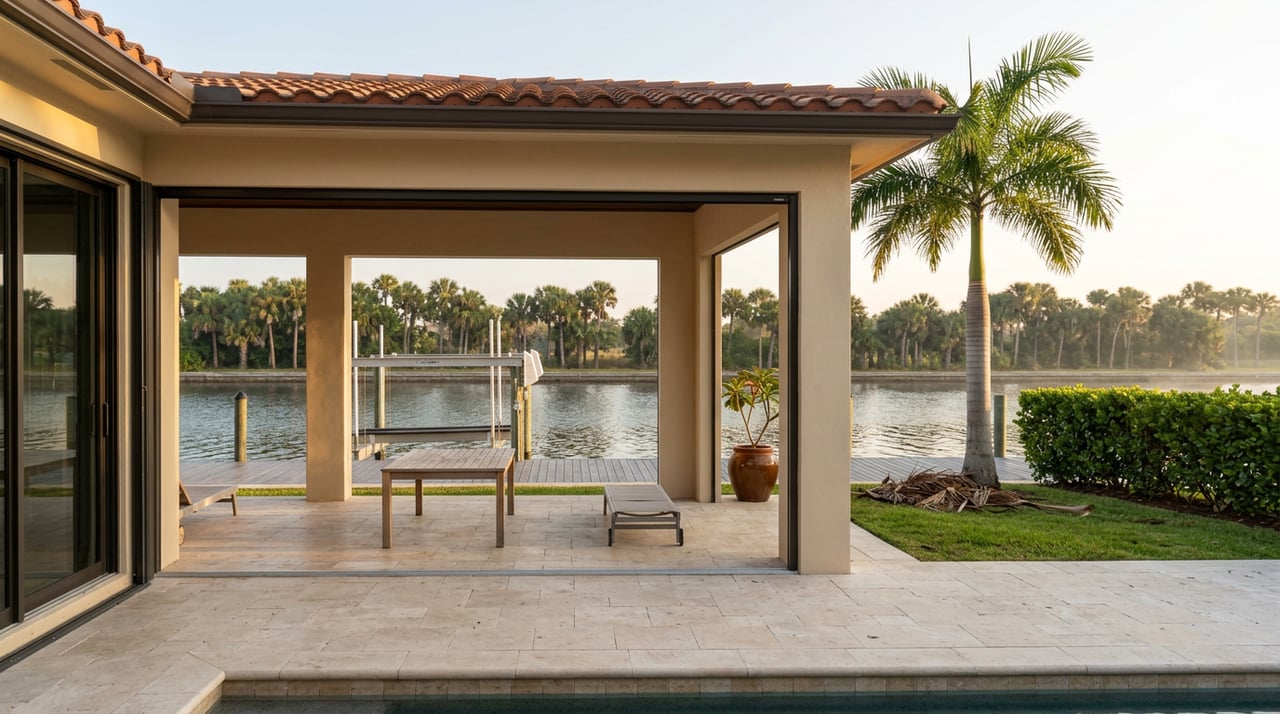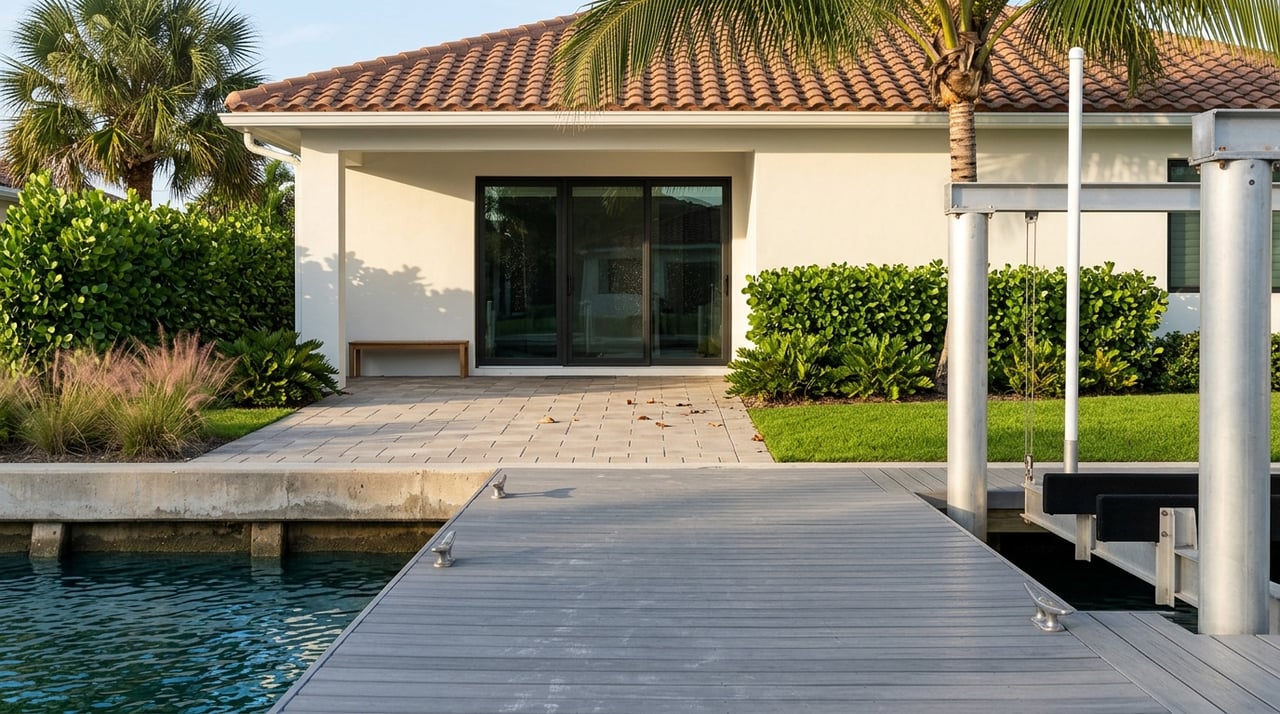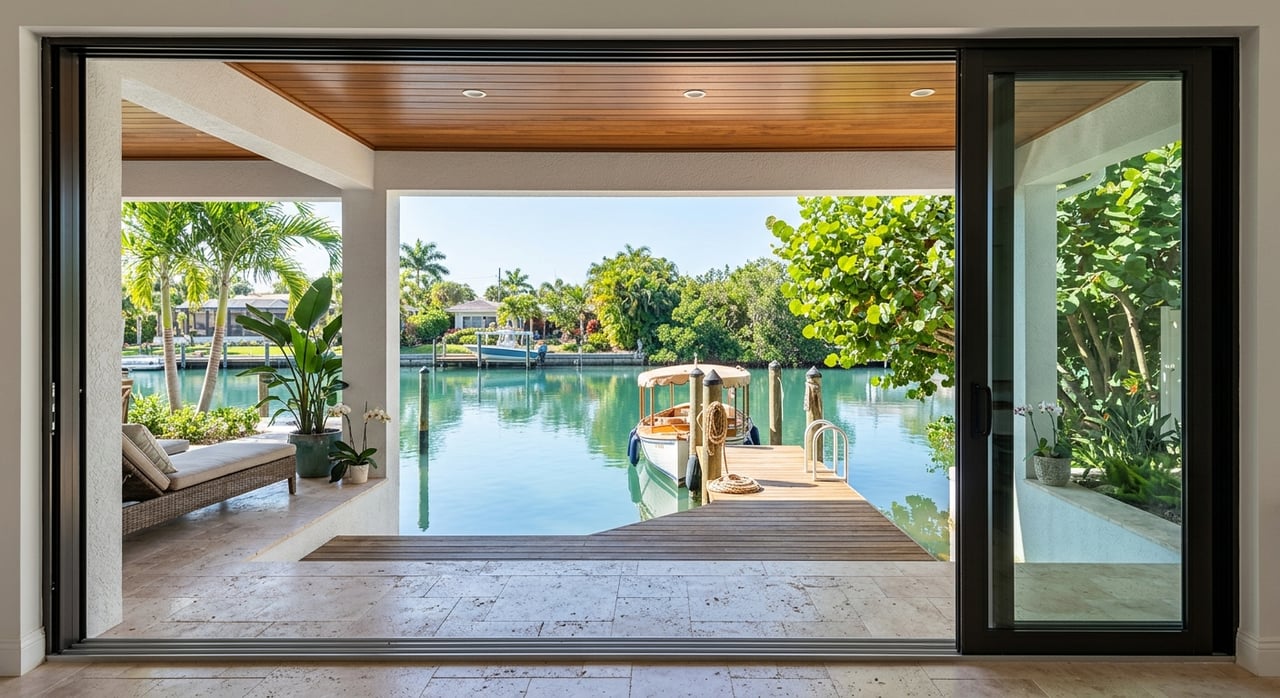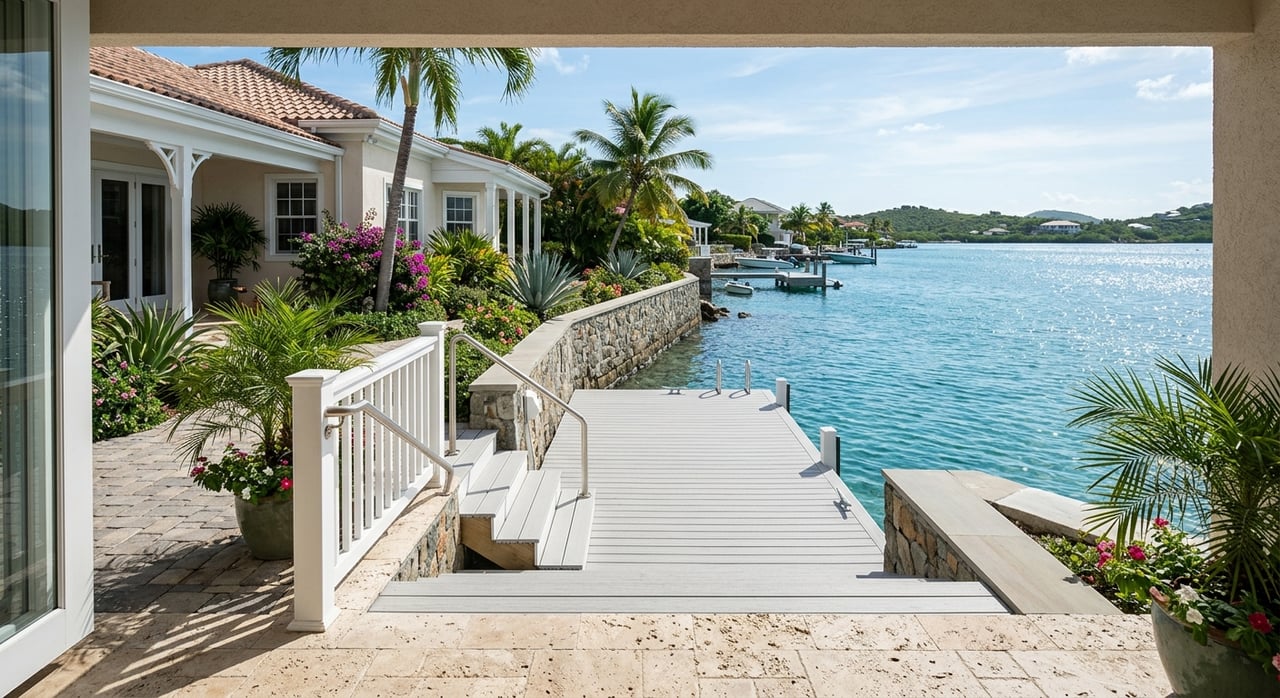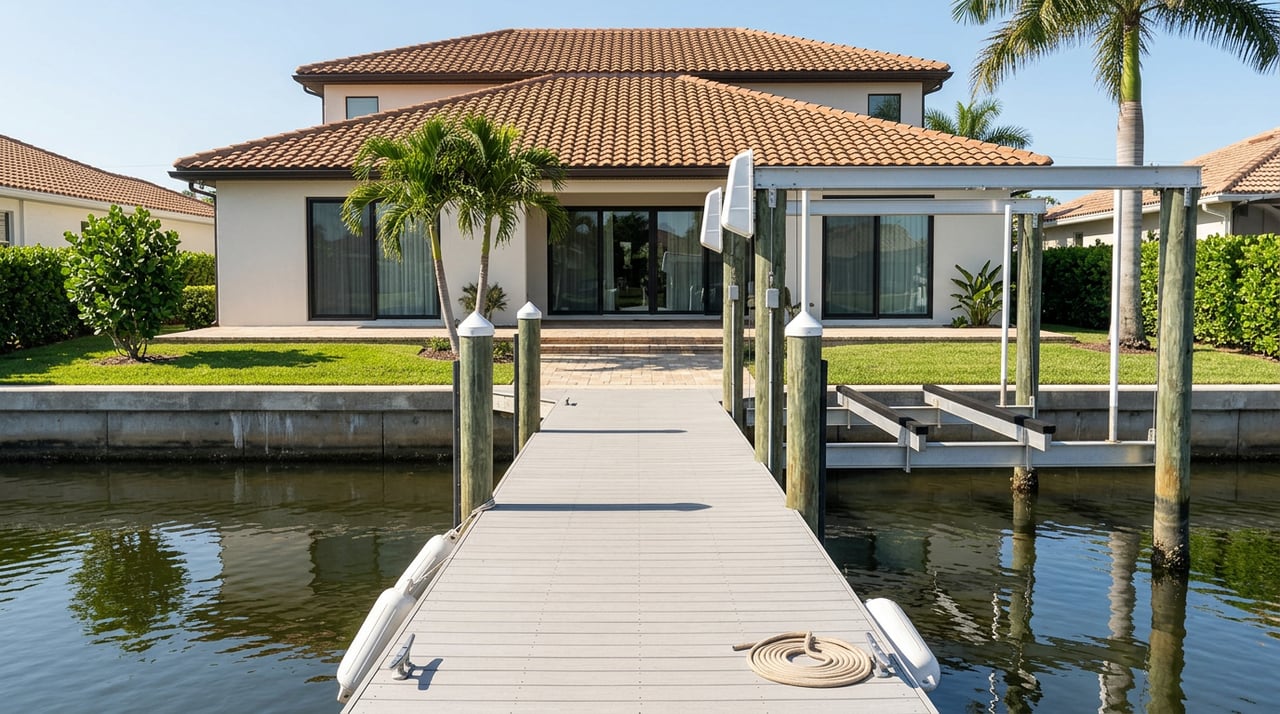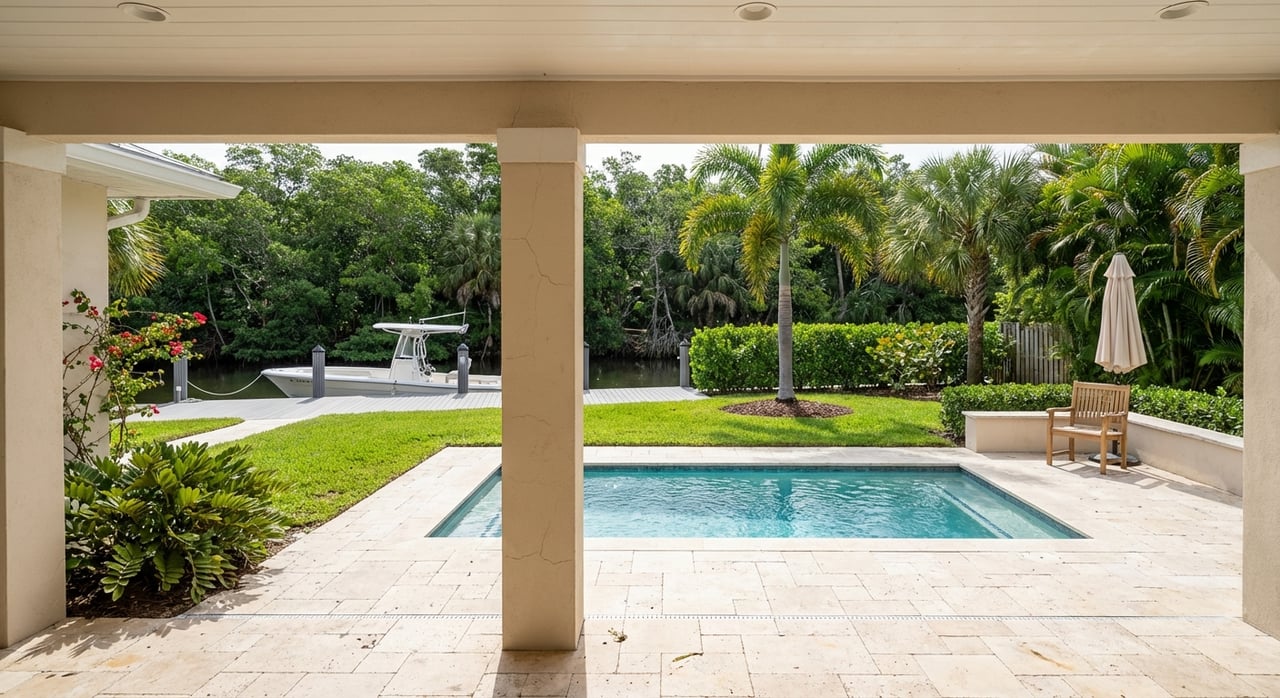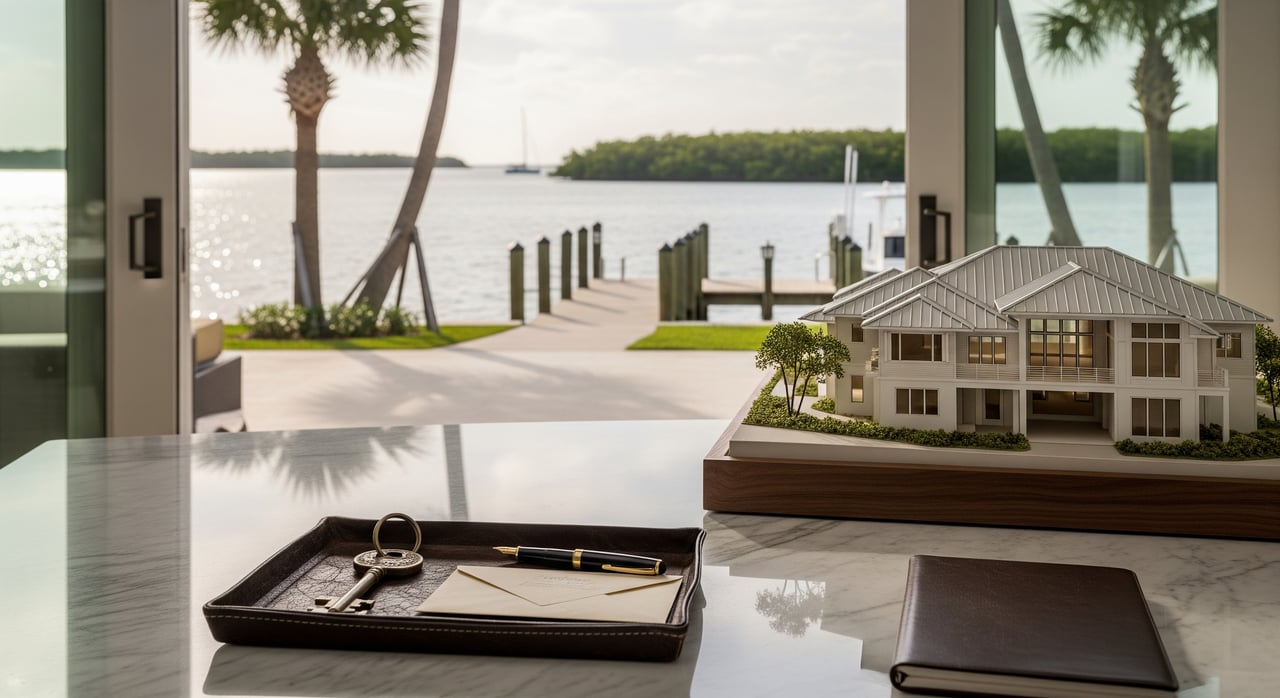
A canal-front listing on Merritt Island goes under contract fast. The dock photographs well, the boat lift works, the seller mentions the wall was patched a few years back. Then the buyer's lender asks for the seawall's permit history and the dock's DEP paperwork, and the seller realizes none of it was ever collected. The house is fine. The water is fine. The closing slows down anyway, because nobody can produce the file.
That gap between "the water looks good" and "the water is documented" is the part most waterfront guides skip. They tell you to check the seawall for cracks and get a flood zone quote. On Merritt Island right now, that advice is only half the story, because a meaningful stretch of the island's canal system sits inside a state aquatic preserve where the easy permitting shortcut doesn't apply, and because Brevard County is about to run a multi-year dredging project through some of the same water these homes back up to. Both facts change what a seller should hand a buyer before anyone writes an offer.
The Free Permit Shortcut That Doesn't Work Here
Florida lets homeowners self-certify small dock projects as exempt from a full environmental permit, and that self-certification is free. It's the fastest path for routine maintenance on a residential dock. But the state's own fee schedule carries one line that matters enormously on Merritt Island: the free online exemption is not available inside an aquatic preserve.
Sykes Creek, the water that wraps much of central and north Merritt Island, sits inside the Banana River Aquatic Preserve. A dock repair on a canal that ties into Sykes Creek can't take the free route. The owner needs an exemption verification, which runs a flat fee through the Florida Department of Environmental Protection's dock permitting fee schedule, or a general permit for anything beyond minor in-kind repair. Brevard County's own environmental permitting office confirms the underlying rule in plain terms: work on the shoreline of the Indian River Lagoon system, including the residential canals that feed it, requires a permit before anyone touches it.
For a buyer, this means the dock you're inheriting was either built through that paid process, built before the preserve designation tightened things up, or built without paperwork at all. For a seller, it means "the dock is fine" is not the same claim as "the dock is permitted," and a lender or title company can tell the difference even if a buyer walking the property can't.
What the Median Price Actually Hides
Merritt Island's closed sales over the six months ending in August 2026 landed at a median of $450,000 across 373 tracked transactions. That single number is nearly useless on its own, because the middle half of those sales closed anywhere between $300,000 and $650,000. A $350,000 spread on either side of the median is not noise. It's the line between an interior lot and a canal lot, and on an island shaped the way Merritt Island is, water access does most of the work of explaining which side of that line a given house falls on.
Listings themselves confirm how much weight sellers put on the marine infrastructure once it's documented. Canal-front homes currently on the market advertise details like a new seawall dated to a specific year or tens of thousands of dollars in permitted waterfront upgrades, spelled out as a selling point rather than a footnote. That's not decoration. It's the paperwork doing the persuading, because a buyer's lender is going to ask the same questions the marketing copy already answered.
Pace has shifted too. Homes in Merritt Island spent a median of 73 days on the market in June 2026, a steep drop from the year before. Faster movement rewards sellers who show up with answers already assembled and penalizes the ones who wait for a buyer's inspector to surface a question about the wall.
| Frontage Type | Typical Price Range (6 mo. through Aug. 2026) | What a Buyer Should Ask For |
|---|---|---|
| Interior lot, no water access | Lower quartile, near $300,000 | Standard inspection only |
| Canal frontage, no ocean access | Mid-range | Seawall age, dock permit or exemption record |
| Deep-water canal to Indian or Banana River | Upper quartile, near $650,000 and above | Full permit trail, marine electrical inspection, flood zone elevation certificate |
The Trail a Seller Should Already Have
Before a canal-front or riverfront listing goes live, the paperwork that answers a lender's or appraiser's questions falls into a short, specific list:
- The DEP exemption verification or general permit number for the dock, if the property sits within the Banana River Aquatic Preserve boundary
- Any local building permit tied to seawall repair or replacement, including the contractor's final inspection sign-off
- A survey depicting the surface water protection buffer line, required for any property on the Indian River Lagoon system, St. Johns River, or Lake Washington
- A certified wetland delineation survey, dated within the last five years, if the parcel borders any mapped wetland area
- Photos or a contractor's report documenting the seawall's current condition, especially if the wall was built decades ago and has never been inspected
None of this requires a lawyer or a specialist. It requires someone to call Brevard County's Natural Resources Management office and ask what's on file for the parcel, then request copies. Most sellers never make that call because nobody tells them the file exists until a buyer's underwriter asks for it mid-transaction.
Sykes Creek Is About to Get Louder for a While
The other piece of this that a generic waterfront guide has no reason to know: Brevard County's Sykes Creek muck dredging project is entering its second phase. According to the state funding request Brevard County filed for the current fiscal year, construction is anticipated to start in July 2026 and the full project is expected to run five to six years. The remaining project area covers about 90 acres of submerged land next to the Ulumay Wildlife Sanctuary, with more than 400,000 cubic yards of accumulated muck still to remove. The county already completed Phase 1, pulling roughly 76,500 cubic yards of sediment near Kiwanis Island Park, and Taylor Engineering has led the design and permitting work on the project since 2014.
For a homeowner on or near Sykes Creek, this isn't background noise. It's a multi-year construction timeline running through the water your dock sits on. A seller listing a home along this stretch owes a buyer a straight answer about what's coming: dredging equipment, barges, and pipeline routed to the material management site, likely for years rather than months. A buyer touring that same home should ask directly whether the parcel falls inside the current or planned dredging footprint, because the answer affects both the next few years of quiet enjoyment and, eventually, water depth and clarity once the work wraps.
The upside is real. The project targets water that hasn't met Class III quality standards and has seen recurring algae blooms, and removing muck typically improves oxygen levels and reduces the kind of fish kills that make a canal unpleasant to live on. But that benefit arrives years down the line, not at closing. Anyone buying now is buying into the construction window, not the finished result.
If You're Selling
Pull the permit file before you list, not after an offer comes in. If the dock was never formally permitted, find out now whether it qualifies for exemption verification or needs a general permit, and price the timeline for either into your listing date. If the seawall hasn't been inspected in years, get a marine contractor's opinion in writing. A wall with visible cracking or leaning can trigger a lender-required repair or an escrow holdback before closing, and that conversation goes better when you raise it than when an appraiser does.
If You're Buying
Ask for the dock and seawall paperwork before you write an offer, not during due diligence. Confirm whether the parcel sits inside the Banana River Aquatic Preserve boundary, since that determines whether future repairs go through the free exemption path or a paid one. If the home sits along Sykes Creek, ask directly about the Phase 2 timeline and what construction access looks like from that specific canal. And remember that a homeowners policy often doesn't cover the seawall or dock at all, so understand what you're actually insured for before you close.
A Few Questions Worth Settling Early
Does the Sykes Creek dredging affect my property if I'm not directly on the creek? The project footprint is specific to the mapped 90-acre area near the Ulumay Wildlife Sanctuary. A home on a connecting canal further from that zone may see little direct disruption, but it's worth confirming your parcel's location relative to the current project map rather than assuming based on general proximity to Sykes Creek.
What if the seller can't find any dock permit at all? That's more common than it should be, especially on docks built decades ago before enforcement tightened. It doesn't necessarily kill a sale, but it does mean budgeting time to pursue an after-the-fact exemption verification or permit, and a lender may want that resolved before funding.
Does a seawall repair always require a permit, even for small in-kind work? Small in-kind maintenance on an existing seawall can sometimes qualify for exemption, but anything that changes the footprint, height, or material typically needs review. Brevard County's permitting office is the right first call to confirm which category a specific repair falls into.
Waterfront on Merritt Island still commands a real premium, and that premium is earned. But the number on the listing sheet only tells half the story. The other half lives in a file at the county office, and whether that file is ready determines how smoothly the sale actually goes.
If you're weighing a move on the water here, Diana Roca can walk you through what a specific canal or river address actually carries in permits, history, and timing, starting with a free home valuation.